Designing Conditioning for Volleyball
Basic principles to remember when designing conditioning for volleyball:
REST PERIODS
A very common false in conditioning for volleyball is their rest periods between the sets are too short. Athletes don't allow themselves to recover from the set and rush to the next set. 
Exception! When training for endurance (for athlete being able to repeat multiple jumps during a long match) - the purpose is to minimize the recovery time. For example low impact plyometrics could be used for endurance conditioning - each set could be 5-15 seconds long and each recovery between the sets very short - just like in volleyball match.
More Rest for Better Conditioned Athletes!!!
Better conditioned athletes may need more rest, if intensity and training loads are high!
Usually better conditioned athletes and athletes with longer weight lifting experience need a longer rest. Since they are able to do those explosive exercises more effectively, they are usually more exhausted after the set and need longer rest periods.
Rest between the Training Sessions
After explosive weight training or plyometric training an athlete needs a minimum of 48 hour rest (some prefer 72 hours) before working out the same muscle group.
 Remember
sufficient rest
Remember
sufficient rest
after explosive workouts.
If an athlete does explosive weight training or plyometric training a day after another, an athlete won't give muscles time to recover or the nervous system to develop. Muscles and the nervous system need rest to grow and develop.
Conditioning for Volleyball - PERIODIZATION

You not supposed to focus fully on one subject only, but you focus on it more than during the other periods. It is not difficult to categorize certain conditioning exercises you need to do for volleyball conditioning - in fact it is really easy and almost everybody can name exercises a volleyball player usually does for conditioning.
What is the most challenging in volleyball conditioning?
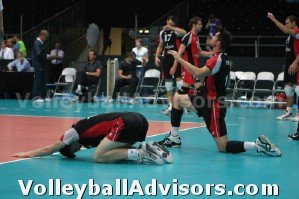
In conditioning for volleyball it is important to understand how many times a week an athlete should do power training, jump training or endurance, etc.
It is extremely important to know how many hours an athlete takes to recover from certain exercises. Very often especially young and ambitious athletes work out TOO MUCH: they seem to think the more you do - the better conditioned athlete you become.
Conditioning for Volleyball - OVERTRAINING
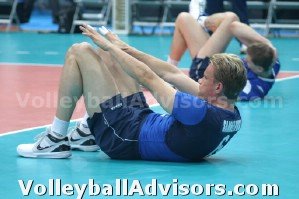
The rest between workouts is one very important aspects in conditioning: the muscles develop and recover while they rest. An athlete needs rest to be in full strength to practice hard in the next session again.
If muscles don't get enough recovery time, an athlete can't push hard enough in the next practice and the practice is not serving its purpose. An athlete needs to be able to push that 100% every time for the best development
Young Athletes Need Guidance!
 Especially young athletes need
guidance in conditioning.
Conditioning is difficult subject even for experienced athletes, even though some of them may feel when they are tired and are able to adjust their training. After athletes gain experience on conditioning they understand to give themselves enough rest and know the best exercises for the particular moment.
Our goal is to educate and provide information which helps coaches and athletes understand conditioning and give knowledge to plan conditioning programs. Conditioning for volleyball is not complicated at all; everybody can master it - after learning few important principles.
Conditioning For Volleyball Related Pages
Volleyball
Conditioning Drills
Like this page:


